
Follow-up
The planned next contact with a customer after a meeting or call, with a purpose and a date.
In plain words
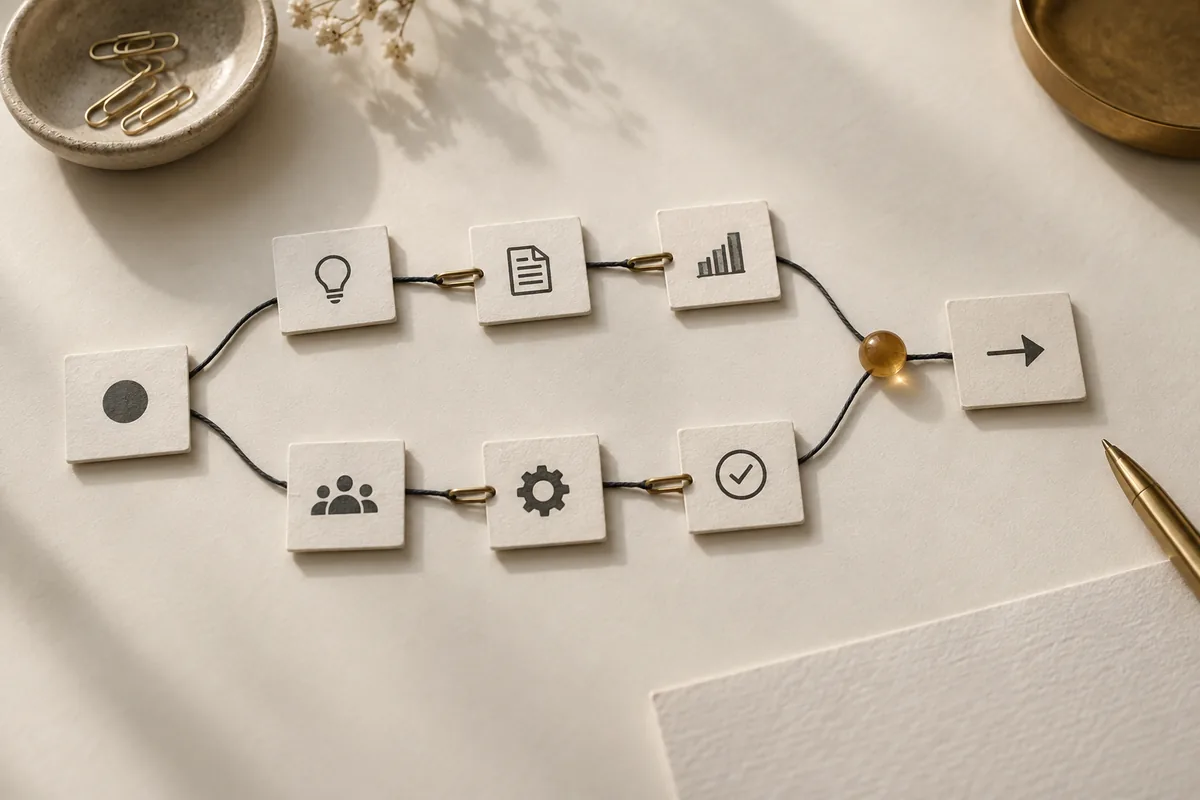
A follow-up is the next contact you plan with the customer after a conversation. It has a purpose, a channel and a date. It is not a reminder to "check in". A good follow-up gives the customer something or asks them for something. That can be an answer, a document or a meeting with the person who decides.
In a CRM a follow-up is a task linked to the deal, with an owner and a due date. The seller sets it before the call ends, ideally agreed with the customer out loud. Then the date is a shared plan, and the follow-up is expected rather than chased.
Worked example
For example, the seller ends the call with a plan. Two price options arrive by Tuesday, then a short call on Thursday to choose one.
How to use it
The follow-up is how a next step happens in practice. The next step says what moves the deal. The follow-up is the contact that makes it happen. When the seller agrees the next contact on the call, the customer has already said yes to it.
In the weekly review, the head of sales does not count follow-ups. Counting rewards volume, and sellers start sending empty messages. Look instead at which follow-ups got a customer action. A deal where several follow-ups in a row got nothing is a stalled deal and needs a decision.
Plan the sequence before the customer goes quiet. Decide how many attempts you make, in which channels, and what each one adds. When the planned attempts run out, the deal counts as ghosted. It gets one closing message, then closes with a reason. That rule protects the sellers' time and keeps the forecast honest.
Common mistakes
- Messages with nothing in them. "Just checking in" asks the customer to do your work. Each follow-up carries one new thing: an answer, a number or a short question.
- No date agreed on the call. A follow-up set after the call surprises the customer. Ask before you hang up: when should we speak next, and what will you have by then?
- Endless chasing. Without a limit, sellers keep writing into silence for months. Agree a fixed number of attempts as a team, then close the deal or hand it over.
- Follow-ups living in personal notes. If the task is not in the CRM, nobody sees it when the seller is away. Put every follow-up on the deal as a task.
NEXT STEP · TOOL
By Friday, each seller checks the deals that had a meeting this week. Every one should have a follow-up task with a purpose and a date. The head of sales reads the purposes, not the count. Any task that says only "follow up" or "check in" gets rewritten, so it names what the customer gets or gives.
CRM rules the team follows and a forecast review you can run every week.