
Objection
A reason the customer gives for not buying yet, such as price, timing or doubt about the result.

In plain words
An objection is what the customer says when they are not ready to say yes. "Too expensive", "not now" and "we need to think" are the most common. An objection is not a refusal. It tells you what is missing before the customer can decide. Treat it as information, and the conversation can continue.
Often the first objection is not the real one. "Too expensive" can mean the customer does not yet see the value, or that someone else controls the money. In a CRM, the seller writes the objection on the deal card in the customer's words. For lost deals, the objection becomes the loss reason.
Worked example
For example, a customer says "it's too expensive." The seller asks what they are comparing it with. The real issue turns out to be a cheaper offer that leaves out setup.
How to use it
Once a month, the head of sales groups the objections and loss reasons from the CRM. Often three or four types cover most of them; check this on your own list. The most frequent one is where to spend the next training session. A rare objection can wait, even if it stung on a recent call.
Objections change what the team fixes. If price comes up early in many deals, the value proposition and the discovery call need work, not the price. If "not now" dominates, look at qualification: deals with no real urgency are entering the funnel.
Objections connect to several neighboring terms. Each common objection deserves a short script. Price anchoring prepares the ground before price objections appear. A concession is sometimes the answer, but only in exchange for something. Many objections surface at the proposal and decision stages.
Common mistakes
- Answering before understanding. The seller hears "too expensive" and offers a discount at once. Ask first: "Compared with what?" or "What would make it worth it?"
- Arguing with the customer. Proving them wrong makes them defend their position. Agree with the feeling, then ask a question that brings out the reason.
- Not writing objections down. The same objection then surprises every seller separately. Record it on the deal card in the customer's words.
- Giving a concession for free. A discount with nothing in return teaches the customer to object again. Trade it for something: a faster decision, a longer contract or prepayment.
NEXT STEP · TOOL
By Friday, the head of sales exports the deals lost in the last two months with their loss reasons. Group them into a few objection types and count each. Pick the most frequent one and write a short script for it with the team. Practice it in a role play on Monday, and check after a month whether that objection still leads the list.
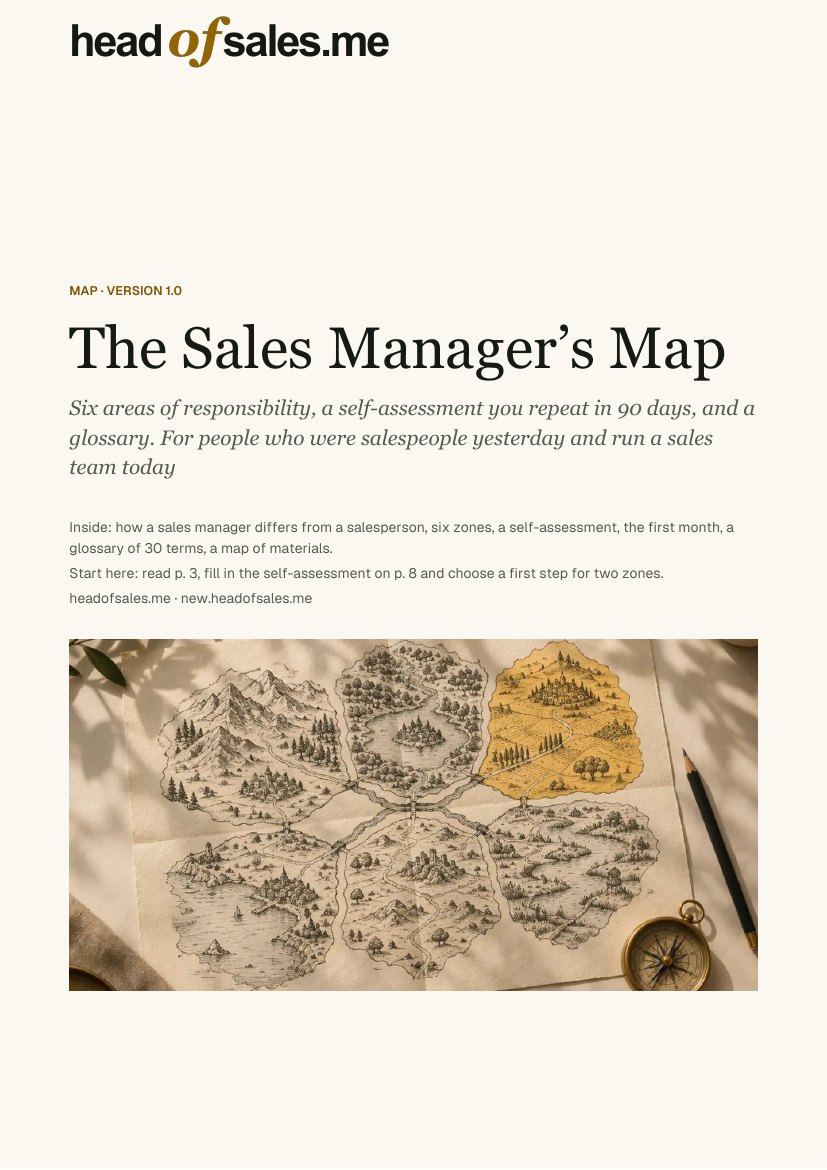
Six areas of the job on one map, with a self-assessment and a plan for your first month.