
CRM
A program or spreadsheet where customers, deals, conversations and tasks are recorded and nothing gets lost.
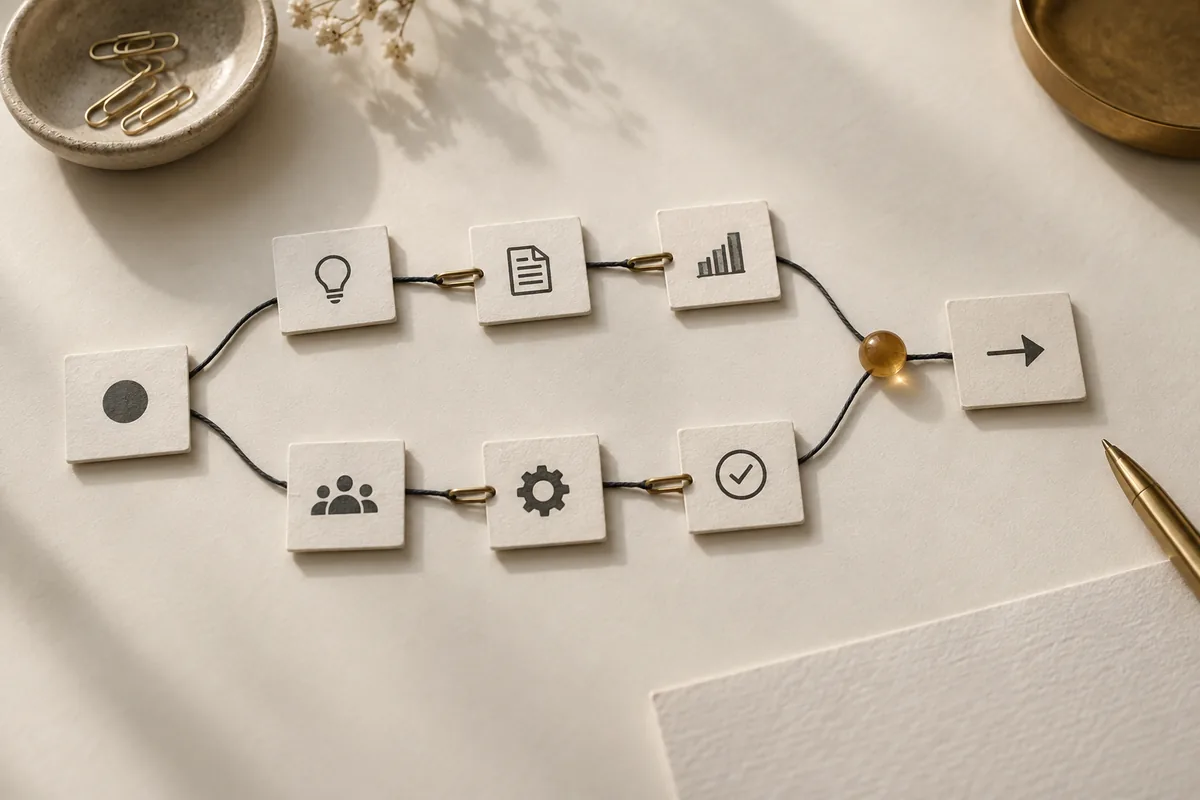
In plain words
A CRM is where your team records customers, deals, conversations and tasks, so that nothing depends on one person's memory. The letters stand for customer relationship management. It can be a dedicated program or a shared spreadsheet. Either works, as long as the whole team writes in the same place.
In a small team, a CRM holds four things: a card for each customer, a deal for each possible sale, a history of messages and calls, and tasks with owners and dates. Every number in this glossary, from conversion to the forecast, is counted from those records. If a deal is not in the CRM, your reports will never see it.
Worked example
The letters stand for customer relationship management.
How to use it
In a team of two to ten sellers, each seller updates their deals on the day of the contact: the new stage, the next step, a few lines from the call. Before the weekly meeting the head of sales reads the CRM instead of asking each person for an update. The owner reads its reports once a month.
The CRM changes the meeting. Nobody opens with "so, what's new?" You start from a list: deals with no next step, overdue steps, missed decision dates. Each deal on the list gets a decision, and the stories about how a call went can wait.
Several neighboring terms live inside it. The funnel is its stages. The next step is a task on the deal card. The decision date is a field. Once those three are filled in, the CRM shows you where the leak is, and nobody has to build a separate report.
Common mistakes
- Buying a bigger system to fix discipline. A new program does not make sellers write things down. Start with a few required fields and check them every week.
- Too many required fields. Sellers type anything just to get past the form. Keep only the fields you actually read in the meeting and remove the rest.
- Updating at the end of the week. Notes written days later lose the details. Agree that a deal is updated the same day as the contact.
- Keeping side lists. With a seller's personal spreadsheet or notes in a chat, the CRM shows only part of the picture. If it matters for the deal, it goes into the deal. Ask each seller to move whatever they keep elsewhere into the CRM this month.
NEXT STEP · TOOL
By Friday, the head of sales writes the CRM rules on one page: the stages, the required fields and one rule, every open deal has a next step with a date. Keep only what the team will check every week. Read the page with the team at the weekly meeting. On the following Friday, pull the list of deals that break the rules and go through it together.
CRM rules the team follows and a forecast review you can run every week.